
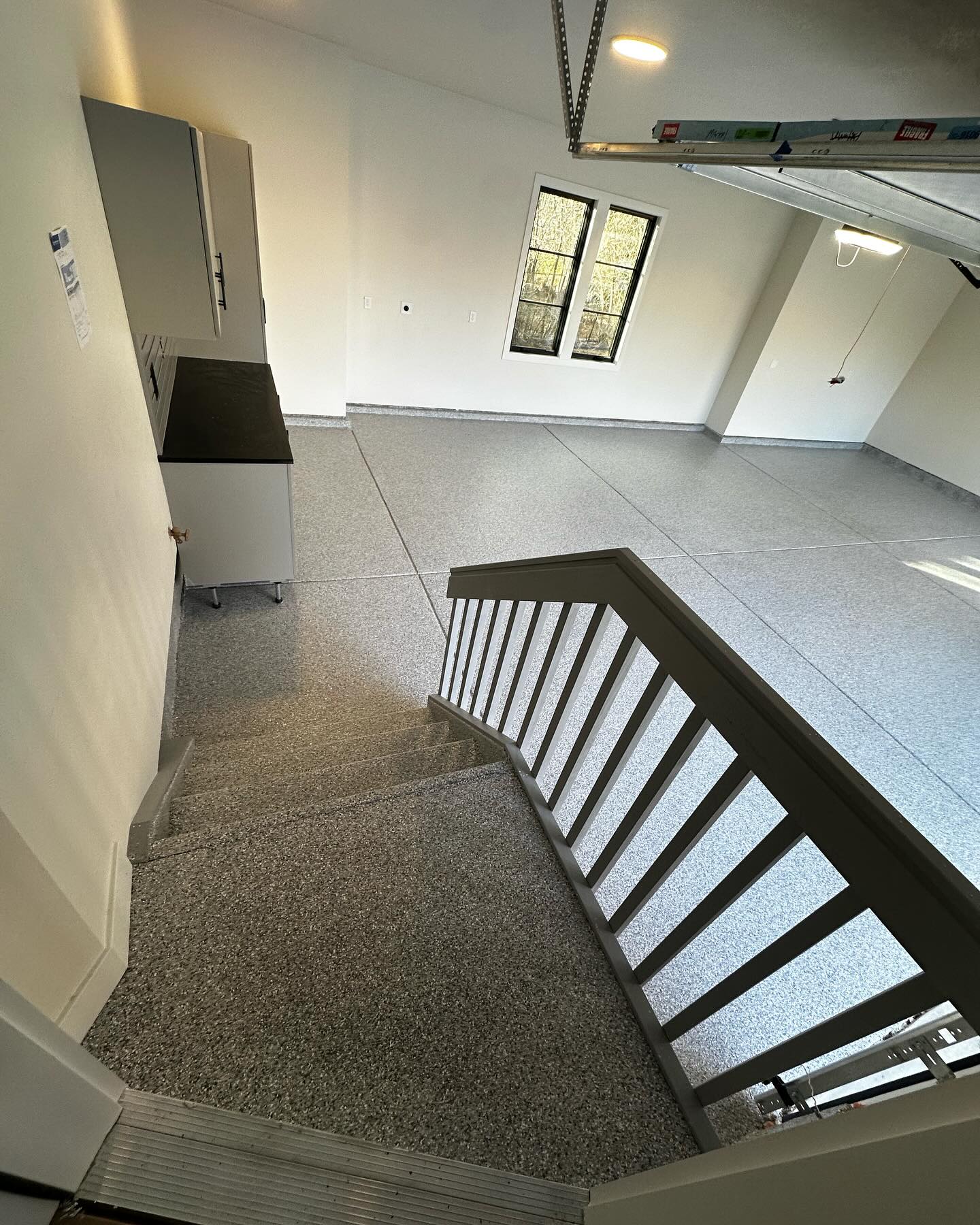
When people start researching garage floors, they usually run into three words over and over: flake, polyaspartic and epoxy. They often get presented as three competing options, as if you have to pick one. In reality, they describe different things. Two of them are coating chemistries, and one is a decorative finish that goes inside a coating system. Once that clicks, choosing a floor gets a lot easier.
The short version
- Epoxy is a type of resin coating. It is commonly used as a base coat because it bonds well to prepared concrete and builds thickness.
- Polyaspartic is a different resin chemistry, related to polyurea. It is known for curing quickly and resisting UV yellowing, and it is often used as a topcoat or as a full system.
- Flake (also called chip) is not a coating at all. It is colored vinyl flake broadcast into a wet base coat, then locked in with a clear topcoat. Flake gives the floor its color, texture and pattern.
So a "flake floor" is really an epoxy or polyaspartic system with flake in it. The question is less "flake or polyaspartic?" and more "which resins should my flake system use?"
Epoxy: the workhorse base coat
Epoxy has been used on concrete floors for a long time, and for good reason. It penetrates and bonds to a properly ground slab, it can be applied in thicker layers, and it offers strong resistance to many chemicals and to abrasion once cured.
Where epoxy shines
- Strong adhesion to well-prepared concrete
- Good build, which helps level minor surface imperfections
- Works as a base for flake broadcasts and for decorative metallic epoxy floors
Where epoxy falls short
- UV sensitivity. Most epoxies amber or yellow with sun exposure over time. In a garage with the door open on sunny afternoons, or on any outdoor surface, that matters.
- Slower cure. Epoxy generally takes longer to cure than polyaspartic, which means more time before you can walk or park on the floor.
- Temperature sensitivity. Epoxy cures more slowly in cold conditions, which can complicate installs in colder months.
Because of the UV issue, epoxy is usually covered with a UV-stable topcoat in garages that get sunlight.
Polyaspartic: fast and UV-stable
Polyaspartic coatings are newer to the residential market and have become popular for garages. They are aliphatic, which in plain terms means they hold their color and clarity under UV light much better than typical epoxies.
Where polyaspartic shines
- UV stability. A good choice for sunny garages, patios and porches.
- Fast cure. Floors are typically back in service sooner than with an all-epoxy system. Your installer will give you specific timing for your project.
- Wider temperature range. Polyaspartics can generally be installed in cooler conditions than many epoxies, which helps with Colorado's shorter fall and spring windows.
- Abrasion and stain resistance as a topcoat, which helps against tire wear and road grime.
Where polyaspartic falls short
- Short working time. The fast cure means it has to be mixed and applied quickly and skillfully. It is not a forgiving material for beginners.
- Prep still matters. Fast cure does not make up for poor surface preparation. It still needs a properly ground, clean slab.
Flake: the finish that ties it together
Flake is what most people picture when they think of a coated garage. Flakes are broadcast by hand into the wet base coat, either lightly or to full coverage, then the excess is scraped and vacuumed off and a clear topcoat seals everything in.
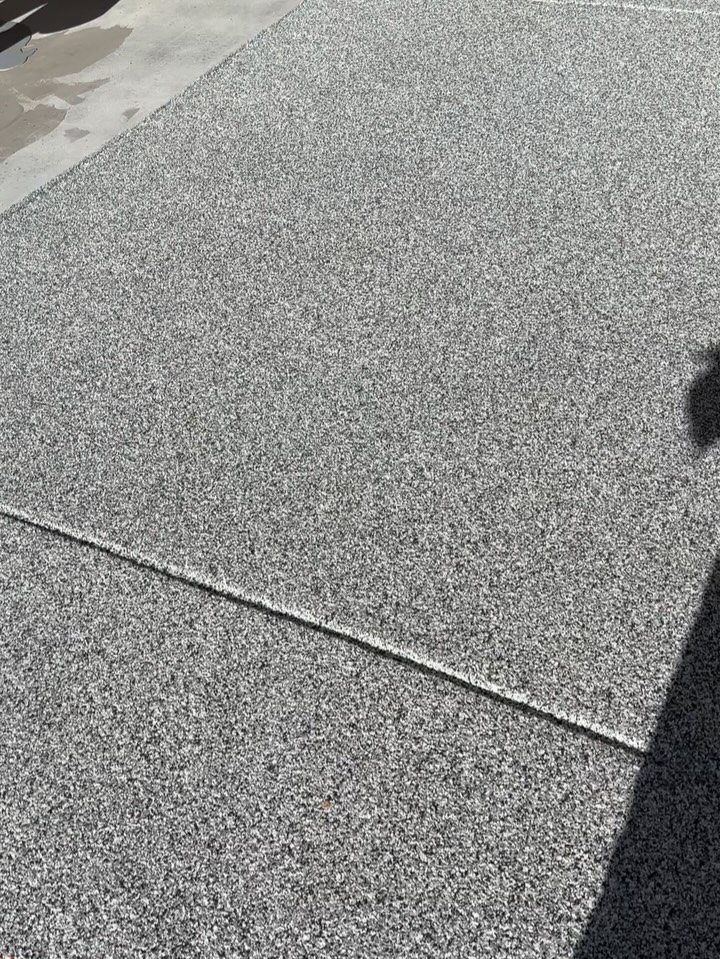
Flake brings a few practical benefits beyond looks:
- Hides dirt and imperfections. A busy flake pattern disguises dust, small stains and minor concrete flaws far better than a solid color.
- Adds texture. Flake gives the surface subtle grip, and the topcoat texture can be adjusted for slip resistance.
- Lots of color options. Blends can be customized. SBV has installed custom blends like "Blue Ice" and has even added glitter on one job.
You can see more about this finish on our flake epoxy floors page.
What about metallic floors?
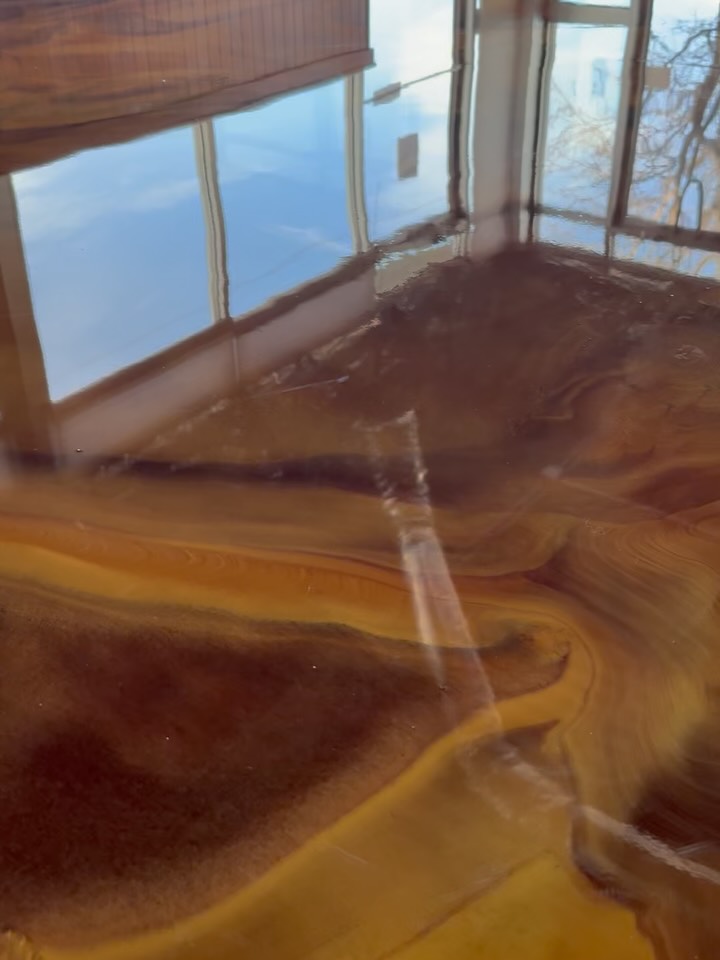
Metallic epoxy is another decorative option, using pigments that create a marbled, swirled look. It is a different aesthetic from flake: glossy, flowing and dramatic. SBV has installed metallic floors such as a dark marble floor in Thornton and a luxury finish for an Airbnb in Fairplay. Metallic floors tend to suit indoor spaces like basements, living areas and show garages.
Which is best for a Colorado garage?
Colorado garages deal with conditions that put extra stress on a floor: freeze-thaw, snowmelt, mag chloride and other deicers tracked in on tires, big temperature swings and strong sun at altitude. For many homeowners here, a common approach is a flake system with a UV-stable polyaspartic topcoat, sometimes over an epoxy base and sometimes as a full polyaspartic build. That combination brings together good adhesion, color stability, abrasion resistance and a finish that hides the grime of winter.
The right choice depends on your slab, how you use the space, how much sun the floor gets and when you want the work done. An on-site visit is the best way to sort that out, and you can browse finished garage floor coatings and other projects in the gallery before you decide.
Ready to talk about your floor? SBV Concrete Coatings offers free estimates across Denver and nearby areas, seven days a week from 9 AM to 5 PM. Get a Free Quote online or call (303) 241-0610 to set up a visit.