
Services
Polyaspartic Coatings for Garages and Patios
A faster-curing, UV-stable coating that keeps its color under Colorado sun and handles snow, salt and temperature swings.
Polyaspartic Coatings
Polyaspartic Coatings from SBV
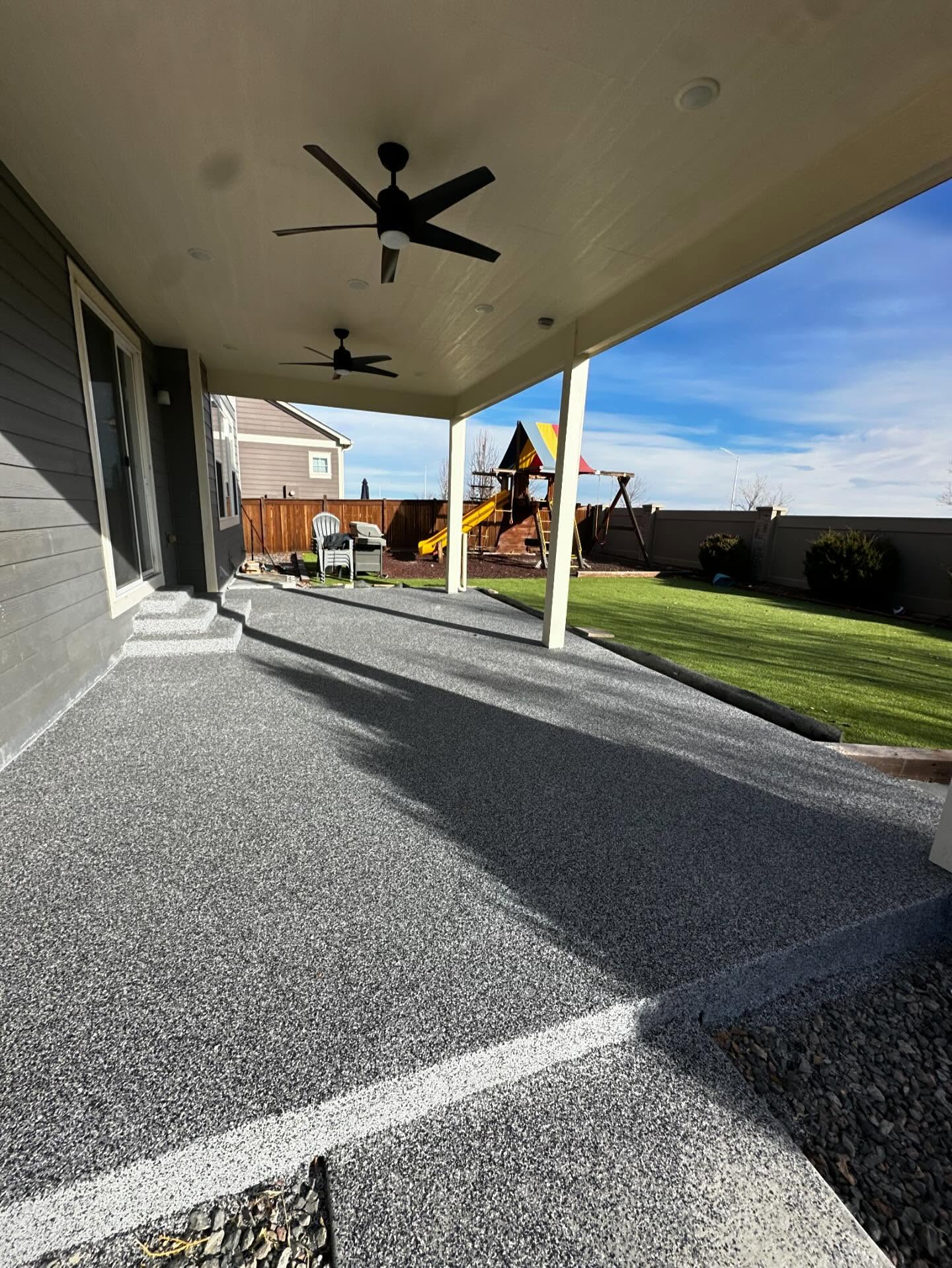
Polyaspartic is a coating that cures faster than traditional epoxy and stays stable in sunlight. That makes it a smart choice in Colorado, where strong high-altitude UV can fade or yellow some coatings and short install windows in the colder months make faster turnaround valuable. SBV Concrete Coatings uses polyaspartic on garage systems and installed it on a covered patio in Thornton, where the finish needed to hold up to strong Colorado sun and seasonal weather.
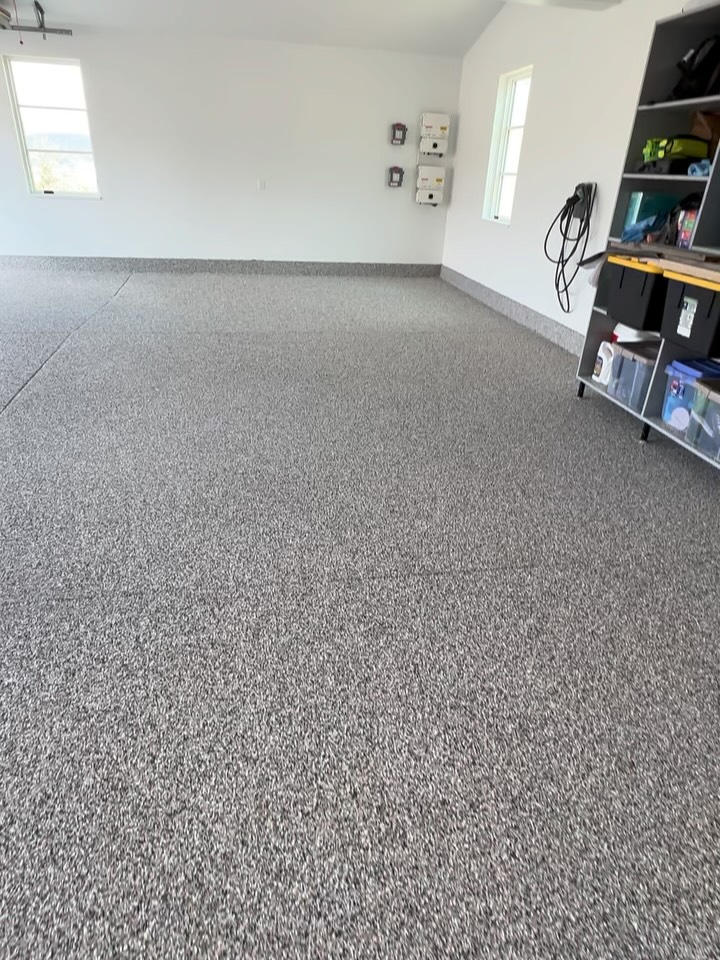
On a garage floor, polyaspartic is often used as the topcoat over a flake broadcast, giving you a tough, clear wear layer that resists hot tires, deicer salts and scuffs. Outdoors, on a patio or porch, its UV stability helps the finish keep its color in direct sun.
Every slab is different, so we start with a walkthrough and moisture check before recommending a system. You can see polyaspartic and flake floors in our gallery, including the covered patio in Thornton.
Why it works
Why choose polyaspartic coatings
Stays True in Colorado Sun
Polyaspartic is UV-stable, so it holds its color and clarity in direct sunlight better than many epoxies, which can yellow over time. That makes it a strong fit for garages with the door open often, covered patios, porches and any space with big south-facing windows.
Faster Turnaround
Polyaspartic cures faster than traditional epoxy, which can shorten the time your garage or patio is out of service. Exact timing still depends on temperature and the system, but the faster cure is a real advantage when cold weather limits install days.
Tough, Clear Wear Layer
As a topcoat, polyaspartic forms a hard, clear layer over flake that resists scuffs, chemicals and hot-tire marks. It protects the decorative layer underneath, so the floor keeps looking good through everyday parking, rolling tool chests and foot traffic.
Handles Salt and Temperature Swings
Colorado slabs see snowmelt, mag chloride and big daily temperature swings. A well-bonded polyaspartic system seals the surface against salty water and stays flexible enough to handle seasonal changes, helping protect the concrete underneath from the scaling and pitting that bare slabs often show after a few winters.
The install
How SBV installs it
Site Check and Moisture Test
We look at the slab, check for moisture, old sealers and damage, and confirm whether polyaspartic fits your space and goals.
Diamond Grinding and Crack Repair
We grind the concrete for a strong mechanical bond and fill cracks, spalls and pits so the surface is smooth and sound.
Base Coat
A base coat is applied to the prepared concrete. Polyaspartic sets up quickly, so we work in planned sections for an even finish.
Flake or Color Layer
Most systems include a flake broadcast for texture and color. The excess is scraped and vacuumed once it sets.
Polyaspartic Topcoat
A clear polyaspartic topcoat seals everything in and gives UV protection. Cure time depends on temperature and the system chosen, and we will walk you through when you can walk on it and when you can park on it.
A good fit for
- Garages with frequent sun exposure
- Covered patios and porches
- Homeowners who want less downtime
- Floors exposed to deicer salts
- Cold-season installs with short windows
Where we install polyaspartic coatings
Project gallery
Polyaspartic Coatings by SBV
Finished SBV projects. Tap any photo to enlarge it.
Customer reviews
What SBV customers say
Nelson helped transform and seal my patio, and I couldn’t be happier with how it turned out! He did a great job explaining the different coating options and helping me understand what would work best for my patio. I really appreciate the amazing service and quality of the finished product. Highly recommend!
Had my garage floor worked on and was very pleased with the results. Professional, quick to start the job, and the work spoke for itself. Definitely will be working with them again.
SBV did an amazing job with my garage. Communication was on point, they sent me process pictures and overall good people . Definitely recommended!
What is the difference between polyaspartic and epoxy?
Both are resin coatings, but they behave differently. Epoxy bonds very well and builds thickness, while polyaspartic cures faster and is UV-stable, so it resists yellowing in sunlight. Many systems combine them, using epoxy or another base and a polyaspartic topcoat. We recommend a system based on your slab, the sun exposure and how you use the space.
Is polyaspartic good for outdoor patios in Colorado?
It can be a good fit, especially on covered patios and porches. Its UV stability helps with the intense sun at altitude. Outdoor concrete also deals with freeze-thaw cycles, moisture and possible slab movement, so we look closely at the slab's condition and drainage before recommending a coating. We installed polyaspartic on a covered patio in Thornton.
How fast can I use my floor after a polyaspartic coating?
Polyaspartic cures faster than traditional epoxy, but we do not promise a set number of hours. Cure time depends on temperature, humidity and the system chosen. At your estimate, and again on install day, we will tell you when it should be safe to walk on and when you can park on it.
Does polyaspartic resist hot-tire pickup?
A properly installed polyaspartic topcoat over a diamond-ground, well-bonded base handles hot tires well. Tire pickup is usually a sign of poor surface prep or a thin coating that never bonded to the concrete. Grinding the slab and using a professional system is how we avoid it.
Related services
Free quote
Price your polyaspartic
Tell us about your space and get polyaspartic coatings pricing from SBV. Free, no commitment.
Tip: in the quote builder, choose “Polyaspartic Flake System” in the Project type step.
- Free estimate, no commitment
- Garages, basements, patios, pool decks, commercial, countertops
- Open 7 days, 9 AM–5 PM
Prefer to talk? (303) 241-0610