
If you have started shopping for a garage floor coating, you have probably noticed that prices online are all over the map. That is not because anyone is hiding the ball. Two garages with the same square footage can need very different amounts of work, and in Colorado the condition of the slab often matters more than its size. This guide walks through the factors that actually move the number, so you know what to look for when you compare estimates.
One note up front: SBV Concrete Coatings does not publish a price list. Every project is quoted after an on-site visit, because the only honest way to price a floor is to look at it, evaluate it and measure it. The estimate is free.
1. Square footage and layout
Size is the starting point. A one-car garage uses less material and less labor than a three-car garage, and larger floors can sometimes be more efficient per square foot because setup and cleanup are spread over more area. But layout matters too. A floor broken up by a workshop bump-out, a mechanical room, a step-down entry or lots of corners takes more detail work than a simple rectangle.
2. The condition of the concrete
This is the factor that surprises people most. Front Range garages see a lot: freeze-thaw cycles, snowmelt dripping off vehicles, and in some neighborhoods slab movement from expansive clay soils. All of that can show up as cracks, spalling, pitting and uneven joints.
Before any coating goes down, damaged areas need to be repaired so the finished floor is smooth and the coating has something solid to bond to. A floor with a few hairline cracks needs far less repair than one with crumbling surface paste near the door or deep spalls where salty slush has sat for years. You can read more about this side of the work on our concrete repair and coating removal page.
3. Surface prep and grinding
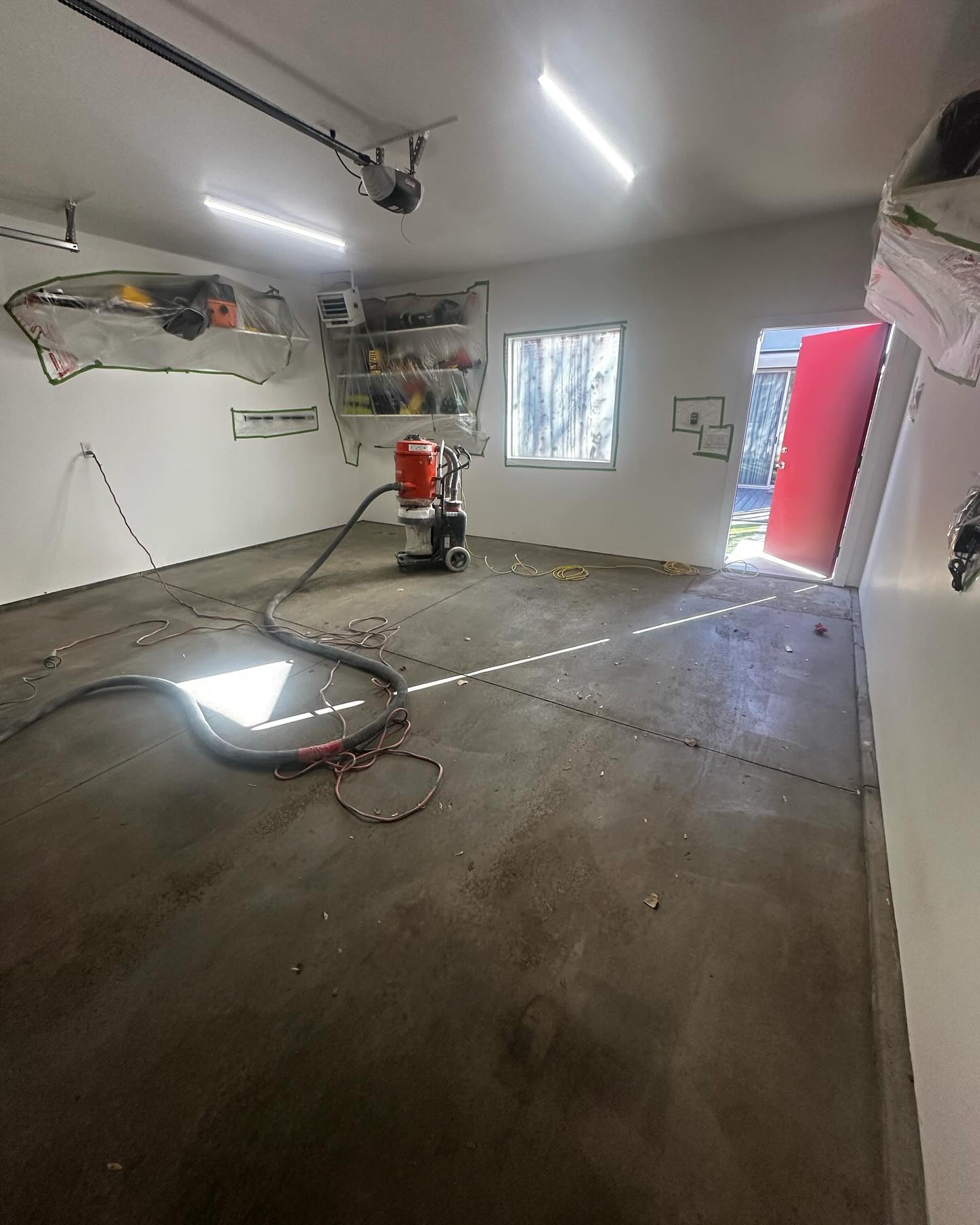
Good coatings need a properly profiled surface. On professional jobs that typically means mechanical diamond grinding to open up the top of the slab, remove contaminants and give the base coat a texture to grip. It is dusty, equipment-heavy work, and it is a big part of what separates a professional installation from a weekend kit. A slab with heavy oil staining, old sealers or a very hard, smooth finish takes longer to grind, which affects labor time.
4. Moisture in the slab
Concrete is porous, and moisture vapor can rise up through it from the ground. Too much vapor pressure under a coating is one of the common reasons floors bubble or peel. If the slab or its history suggests a moisture problem, a moisture-mitigating primer or barrier may be recommended before the coating system. That adds material and a step to the process, but it protects the whole investment. For example, SBV has installed a moisture barrier under a flake garage floor for a homeowner who had dealt with constant moisture and peeling concerns.
5. Existing coatings that need to come off
If your garage already has paint, a DIY epoxy kit or a failing older coating, it usually has to be removed before a new system goes down. Coating over a failing layer just means the new floor inherits the old one's problems. Full removal grinds take more time and generate more debris than grinding bare concrete, so they are priced accordingly.
6. The coating system you choose
Not every system is built the same way. A flake epoxy floor, a polyaspartic system and a metallic epoxy floor each involve different materials, numbers of coats and installation techniques. Some systems use an epoxy base with a polyaspartic topcoat; others use polyaspartic throughout. Faster-curing and UV-stable materials, thicker builds and specialty finishes all influence material cost. During your visit, you can talk through how you use the space and which system fits.
7. Flake blend and coverage
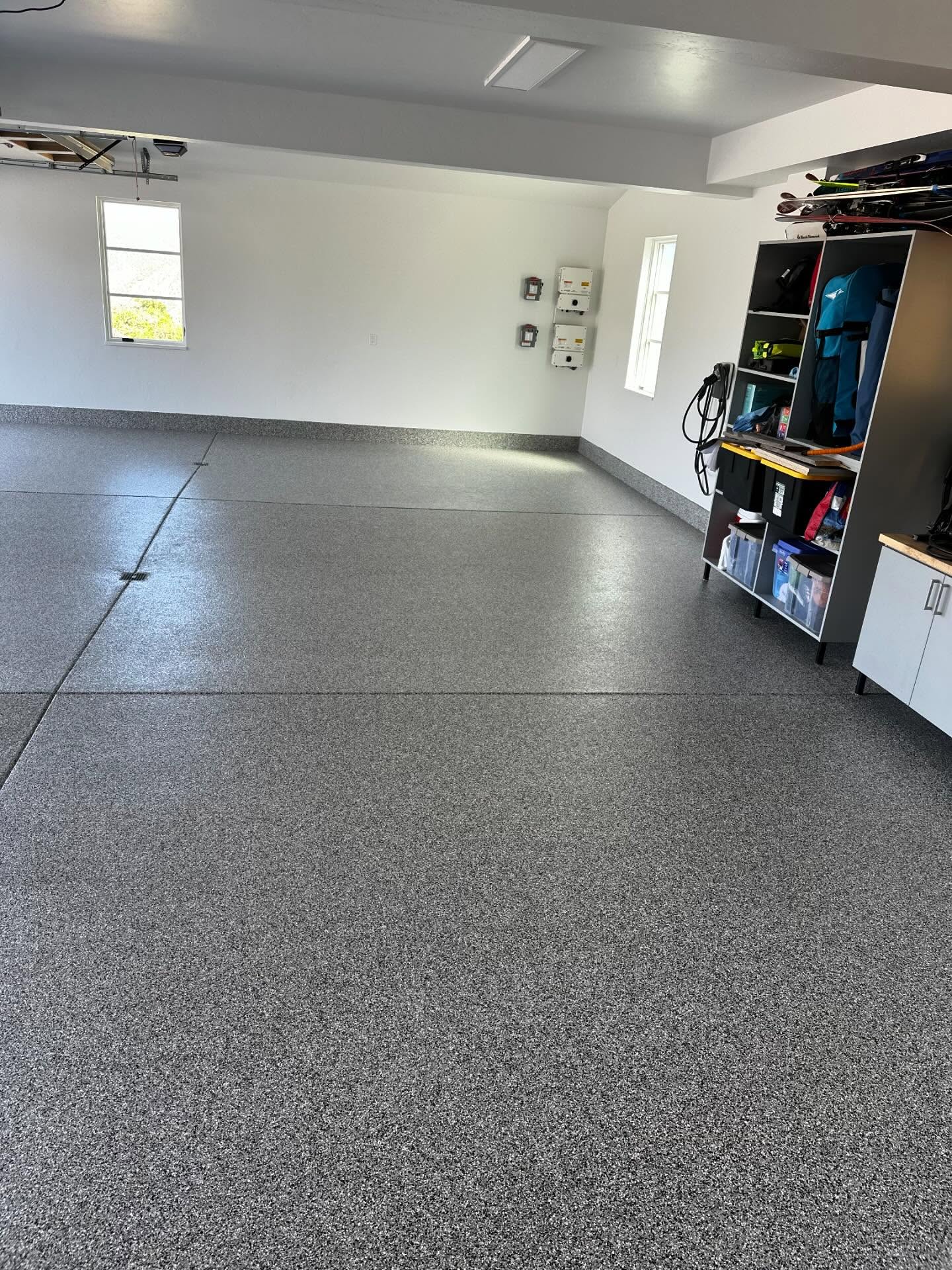
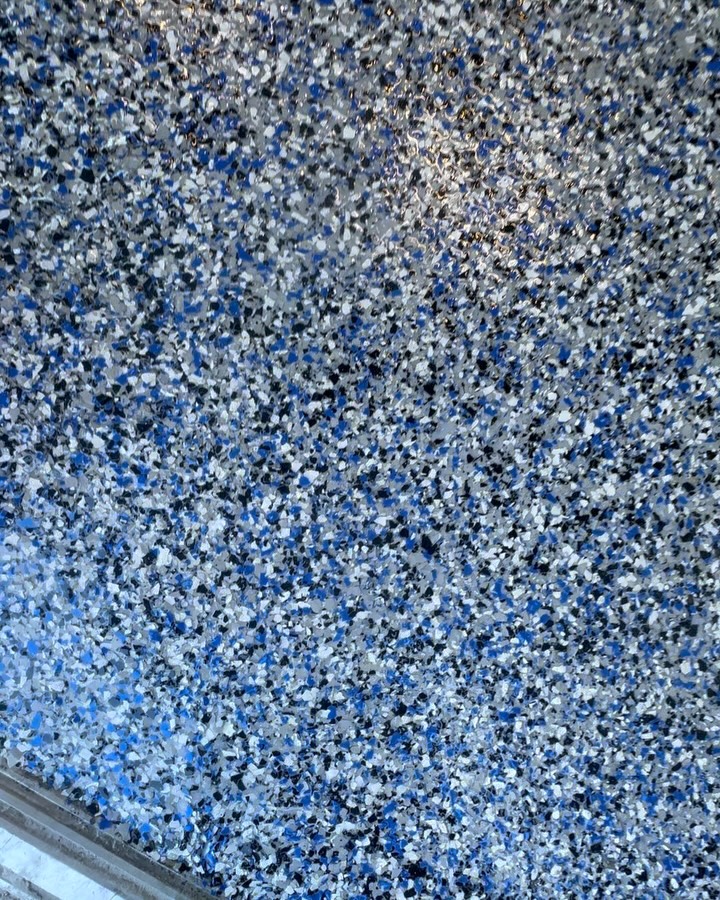
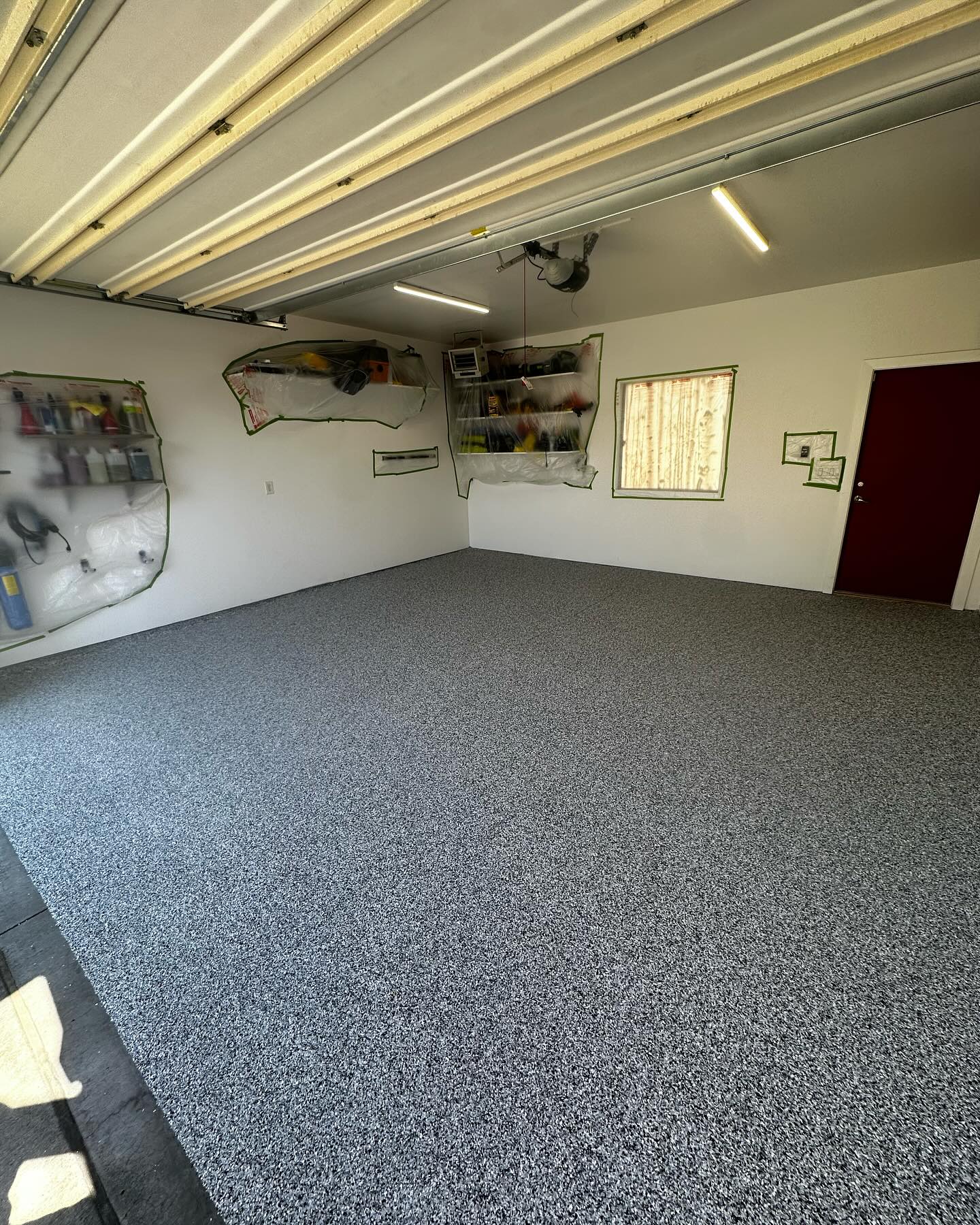
Decorative flake is broadcast into the base coat, and how much you use changes both the look and the material count. A full broadcast, where flake covers the base completely, gives a uniform, textured look that hides dust and minor imperfections well. A lighter, partial broadcast shows more base color. Custom blends, such as the "Blue Ice" blend SBV has used, or add-ins like glitter, can also affect cost.
8. Stairs, steps and vertical surfaces
Many garages have a step or short stair into the house, and some have stem walls or curbs along the edges. Coating these takes careful hand work: edges, risers and nosings need to be prepped and finished individually. If you want them done to match the floor, mention it during the estimate so it is included.
9. Access, timing and location
Practical details play a role, too. Whether the garage can be fully emptied, access to power and water, and the time of year can all affect scheduling. Colder months can shorten install windows, and heated mountain garages have their own considerations. SBV works throughout the Denver metro, including Denver, Thornton and Parker, and also takes on work out of town in mountain communities.
How to compare garage coating quotes
When you have more than one estimate in hand, try to compare them line by line instead of looking only at the total. A few questions to ask:
- How will the floor be prepped? Ask whether it will be ground and what happens to cracks and damaged areas.
- Is moisture addressed? Ask how the installer evaluates moisture and what they recommend if it is present.
- What system is being installed? Ask about the base coat, flake coverage and topcoat, and how many coats.
- What is included? Confirm whether steps, edges and any coating removal are part of the price.
- What are the warranty terms? For SBV, warranty terms are listed in your written estimate.
A lower number that skips grinding or repair can end up costing more if the floor has to be redone. It is worth looking at finished work, too. Browse the project gallery and read what homeowners have said on our reviews page.
The bottom line
The cost of a garage floor coating in Denver comes down to how much work the slab needs before the coating goes down, plus the system and finish you choose. An on-site visit is the only way to see all of that clearly, and it gives you a chance to ask questions and look at options in your own space.
Ready to talk about your floor? SBV Concrete Coatings offers free estimates across Denver and nearby areas, seven days a week from 9 AM to 5 PM. Get a Free Quote online or call (303) 241-0610 to set up a visit.