
A coated patio or front porch can change the way your home looks and feels. Gray, stained concrete becomes a clean, finished surface that is easier to sweep and hose off. But outdoor concrete in Colorado faces a tougher job than a garage floor. It sits in direct sun at altitude, takes snow and shovels all winter, and goes through freeze-thaw cycles season after season. Choosing the right system and prep makes all the difference.
Colorado's outdoor challenges
Intense UV at altitude
Denver sits about a mile above sea level, and the mountain towns are much higher. Thinner atmosphere means stronger ultraviolet exposure, which breaks down and discolors many coatings over time. Most standard epoxies will yellow or chalk outdoors. For exterior concrete, a UV-stable topcoat is a must.
Freeze-thaw and snowmelt
Water that gets into concrete expands when it freezes. Over many winters, that can widen cracks and cause the surface to flake or spall. A coating helps by sealing the surface against water, but only if it is installed over sound, repaired concrete and properly bonded.
Snow shovels and ice melt
Porches and walkways get shoveled. A metal shovel edge dragged across a soft or thin coating will scratch it. Ice-melt products can also be harsh on exterior surfaces. A durable, abrasion-resistant topcoat holds up much better, and a plastic shovel or one with a rubber edge is gentler still.
Big temperature swings
Colorado can go from warm afternoons to freezing nights in the same day, especially in spring and fall. Concrete expands and contracts with those swings, and the coating has to move with it without cracking or losing its bond.
Why polyaspartic is a strong choice outdoors
Polyaspartic coatings are popular for patios and porches because they are UV-stable, meaning they resist yellowing in sunlight much better than typical epoxies. They also cure faster, which shortens downtime on a busy entry, and they can generally be applied across a wider temperature range than many epoxies. That helps in Colorado, where outdoor install windows can be short. Specific cure timing depends on the product and conditions, and your installer will give you guidance for your project.
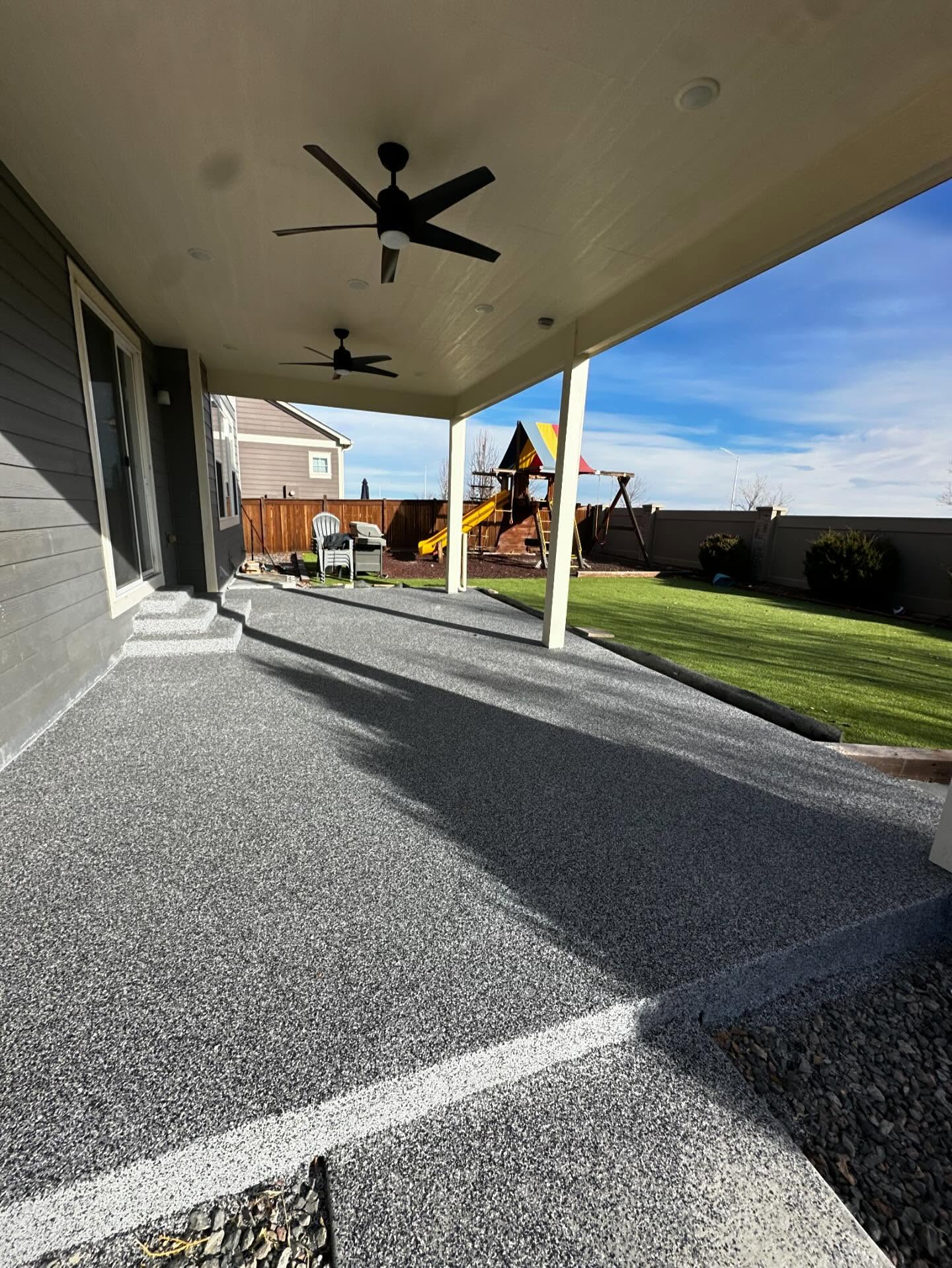
SBV used a polyaspartic system on a covered patio in Thornton. A covered patio still sees angled sun, wind-driven snow and big temperature changes, so a UV-stable, durable coating made sense even with a roof overhead.
Covered vs. open patios
Covered patios are generally the friendliest outdoor surfaces for coatings. They see less direct sun, less standing water and less snow load. They still need UV-stable materials and proper prep, but the coating does not face the full force of the weather.
Open patios take everything Colorado can throw at them: full sun, rain, hail, snow and pooled meltwater. Product selection, slip resistance and drainage become more important. Before coating an open patio, it is worth looking at how water flows off the slab. A coating will not fix a patio that slopes toward the house or holds puddles, and standing water in winter means ice.
Slip resistance matters
A smooth, glossy coating outdoors can be slick when wet or frosty. That is one reason decorative flake is a popular choice on porches and patios. The flake adds visual texture, and the topcoat can be finished with a slip-resistant additive for more grip. If you have kids, older family members or pets using the space, talk about traction during your estimate. A little added texture can make a big difference on an icy morning.
A front porch flake project
Front porches are the first thing guests see, and they take a beating from boots, packages, planters and snow. SBV completed a flake coating on a front porch that went from worn concrete to a clean, uniform surface.
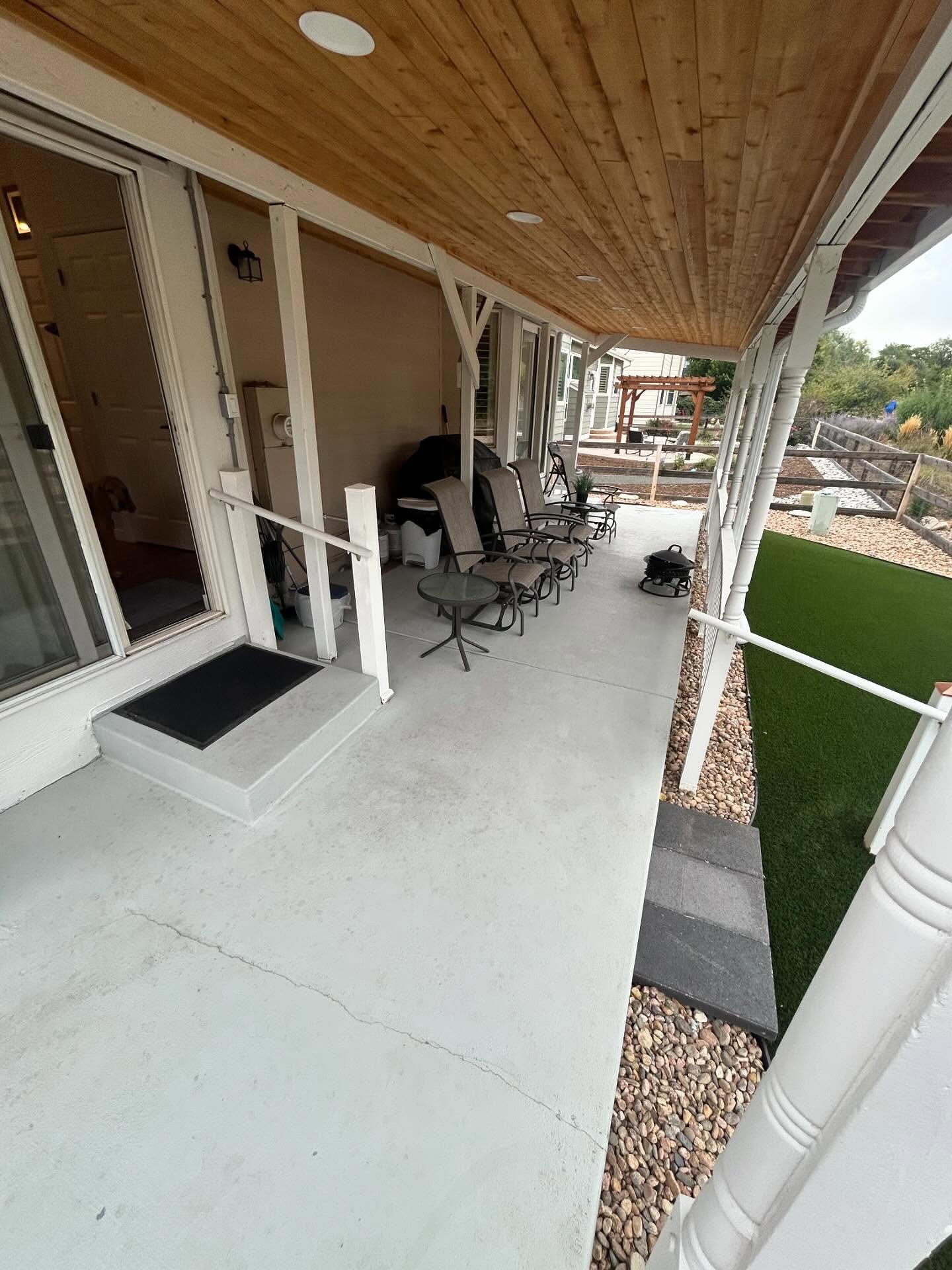
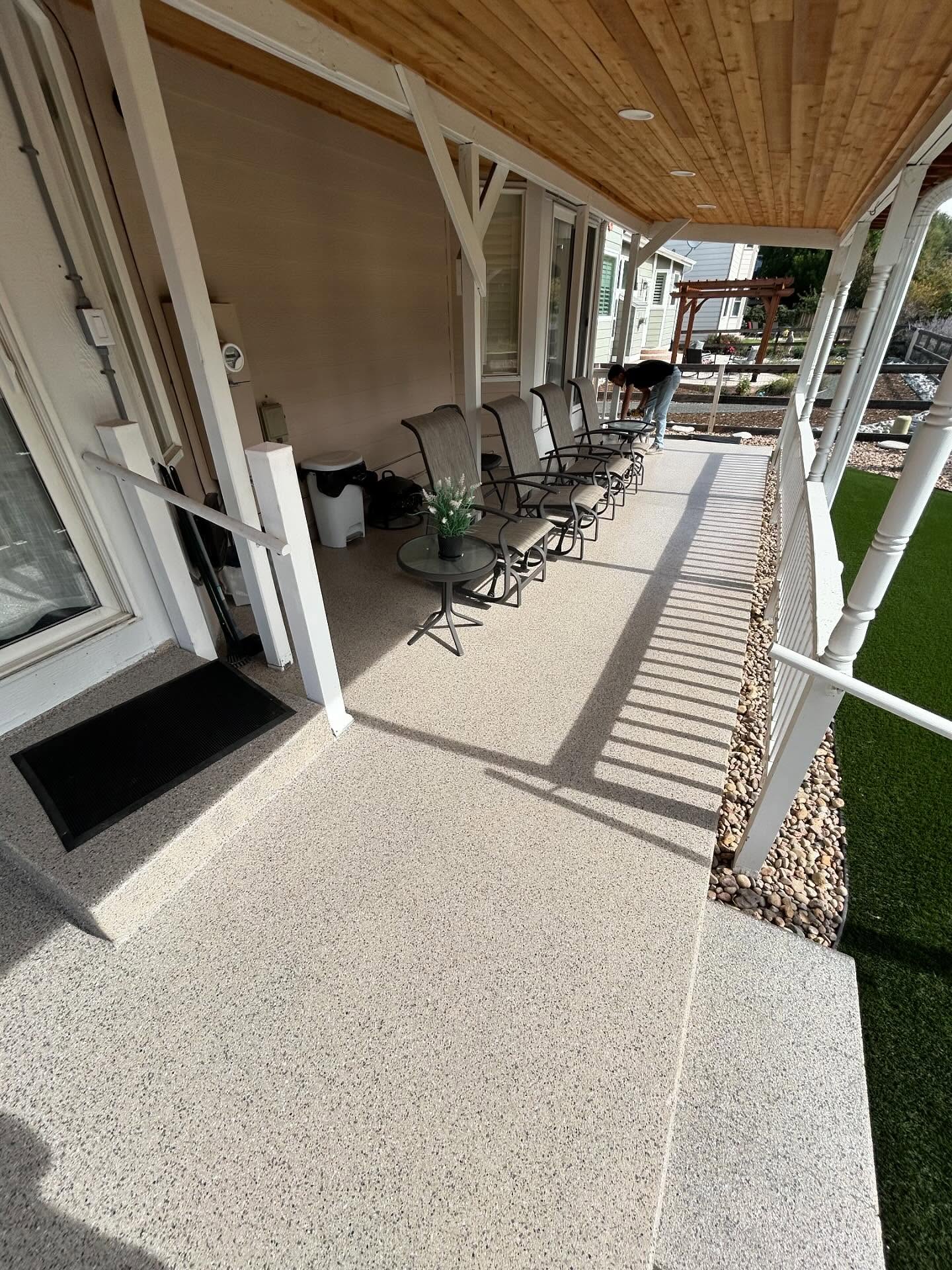
Flake works especially well on porches because it hides dirt and small imperfections and lets you choose a color blend that complements your home's exterior. Steps and edges can be coated to match for a finished look. You can see more about this finish on our flake epoxy floors page.
Prep is still the foundation
Outdoor concrete often has more surface damage than an interior slab: scaling from deicers, cracks from freeze-thaw and slab movement, and years of dirt and organic staining. A good outdoor coating job starts with:
- Cleaning and grinding to remove contaminants and the weak surface layer.
- Repairing cracks and spalls so the finished surface is smooth and sealed.
- Removing old sealers or paint that would prevent a good bond.
- Checking drainage so water does not pool on the new surface.
Our concrete repair and coating removal page covers that work in more detail.
What about pool decks?
Pool decks are less common in Colorado than in warmer states, but the same principles apply: UV stability, slip resistance and solid prep. If you have one, it is worth discussing during an estimate.
Planning your patio or porch project
The best time to coat outdoor concrete is when temperatures are mild and stable. In Colorado, that tends to mean late spring through early fall, though timing depends on the product and conditions. Scheduling early in the season gives you more flexibility.
SBV has completed outdoor projects in places like Thornton and Parker, where a 1,175-square-foot transformation included garage, basement and patio areas. Learn more on our patio and porch coatings page, and browse the gallery for ideas.
Ready to talk about your floor? SBV Concrete Coatings offers free estimates across Denver and nearby areas, seven days a week from 9 AM to 5 PM. Get a Free Quote online or call (303) 241-0610 to set up a visit.