
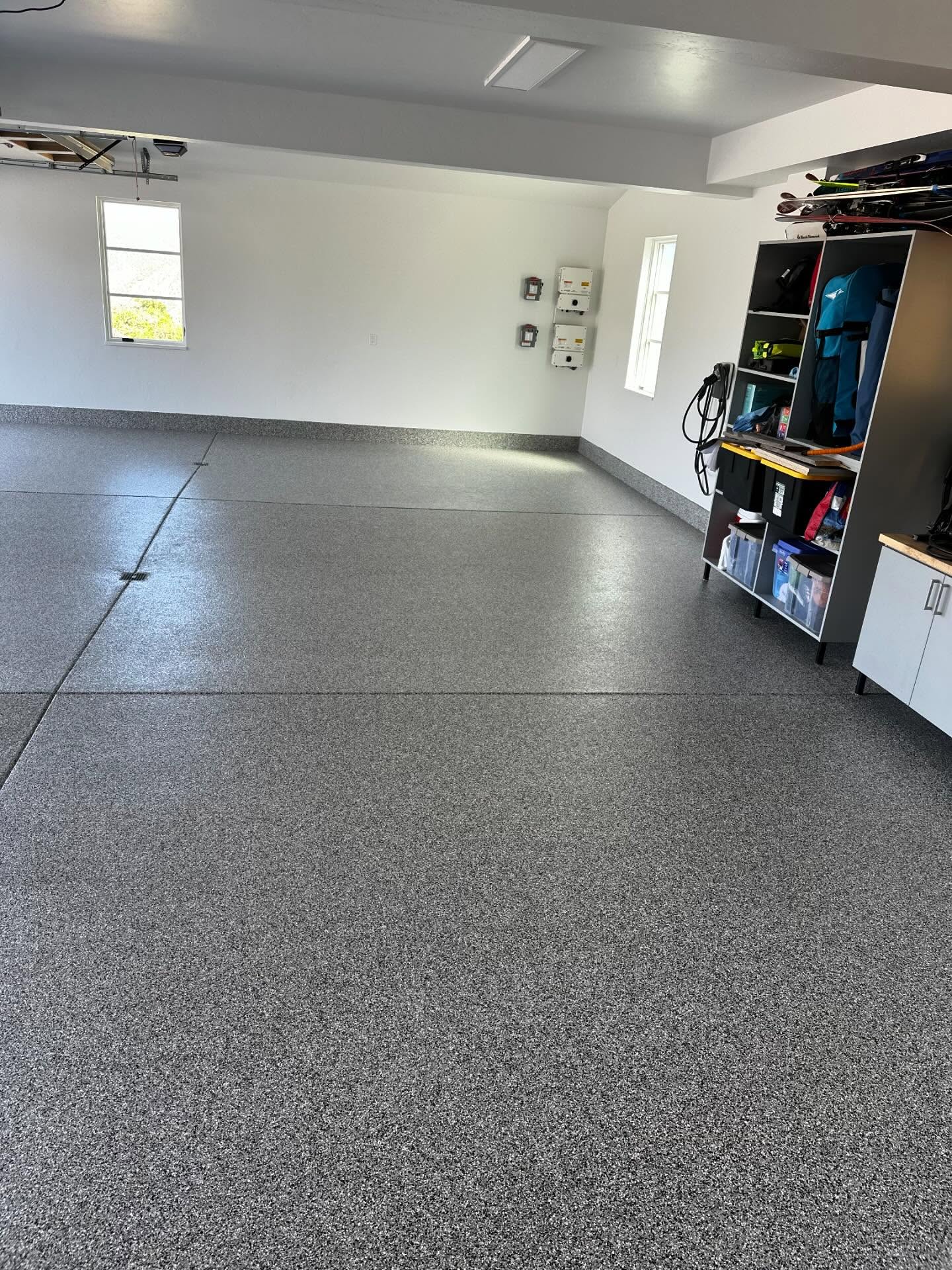
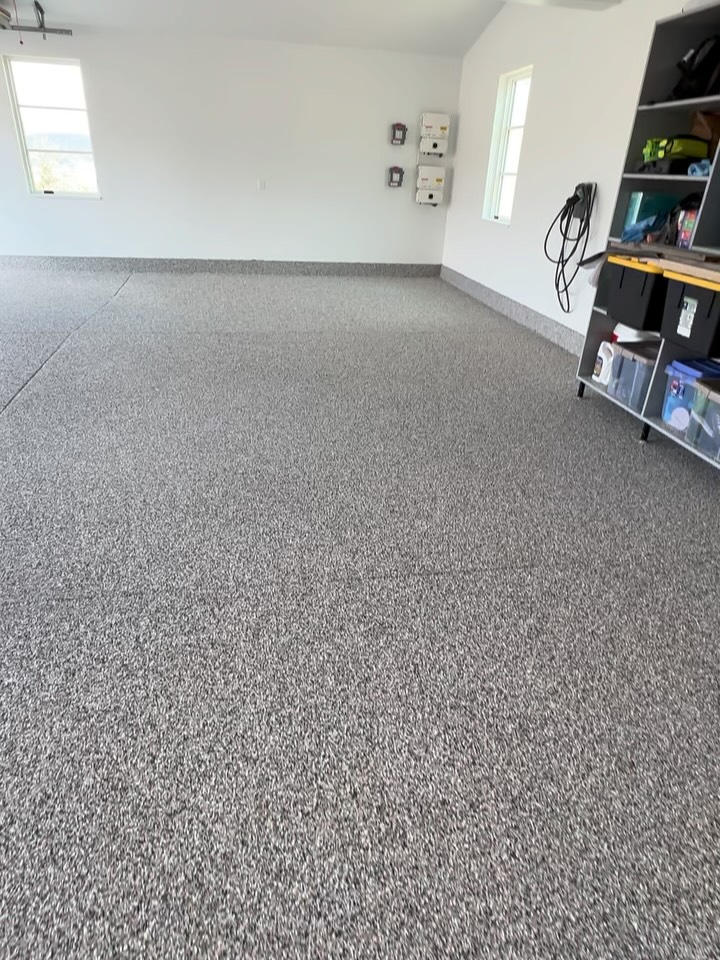
One of the best things about a coated garage floor is how easy it is to keep clean. Compared to bare concrete, which soaks up oil and stains and sheds dust, a sealed coating wipes clean with very little effort. But in Colorado, winter brings a specific set of challenges: snowmelt, slush and road deicers tracked in on every drive. A few simple habits will keep your floor looking good and performing well for years.
Why snow country is different
Colorado road crews use deicers, including magnesium chloride, to keep roads clear. That chemical mix ends up in the slush that clings to your wheel wells and drips onto the garage floor. As the water evaporates, it can leave a white, filmy residue. Left alone, that residue dulls the finish, can feel slick and makes the floor look dirty even when it is not. Mountain homes deal with even more of it, plus mud season in the spring.
Rinse off mag chloride regularly
The most important winter habit is simple: do not let deicer residue build up.
- Squeegee standing slush toward the door or drain after storms, so it does not sit and dry on the floor.
- Rinse periodically with clean water, especially after heavy storm cycles. A garden hose on a mild day, or a bucket and mop, works fine.
- Clean the white film with warm water and a mild cleaner. If residue persists, a cleaner made for removing salt residue from coated floors can help. Rinse well afterward.
Many homeowners do a deeper cleaning once or twice a winter and a thorough rinse in spring once deicer season ends.
Use mats strategically
Mats can help, but choose them carefully.
- Containment mats under each vehicle catch slush and meltwater and keep most of the mess in one place. Empty and clean them regularly.
- Entry mats at the door into the house cut down on salt and grit tracked inside.
- Avoid leaving rubber-backed mats in one spot for long periods. Some rubber backings can discolor coatings over time, and mats that trap moisture keep the floor wet underneath. Lift and dry them occasionally.
Cleaners to use and to avoid
For routine cleaning, warm water with a gentle, pH-neutral cleaner and a soft mop or soft-bristle push broom is all you need. For heavier jobs, a soft deck brush works well.
Avoid:
- Harsh acids such as muriatic acid, and heavy vinegar cleaning, which can dull the finish over time.
- Citrus-based or solvent-heavy degreasers left to sit on the surface for long periods.
- Soap-based cleaners that leave a film. That film can make the floor slippery and attract dirt.
- Abrasive scrub pads and steel wool, which scratch the topcoat.
If you are not sure about a product, test it on a small, hidden area first, and always rinse with clean water.
Wipe up spills quickly
Coatings resist most common garage chemicals, but no surface likes to soak in them. Oil, antifreeze, brake fluid, gasoline and battery acid should be wiped up promptly. Antifreeze can be slippery and is toxic to pets, so clean it right away.
About hot tires
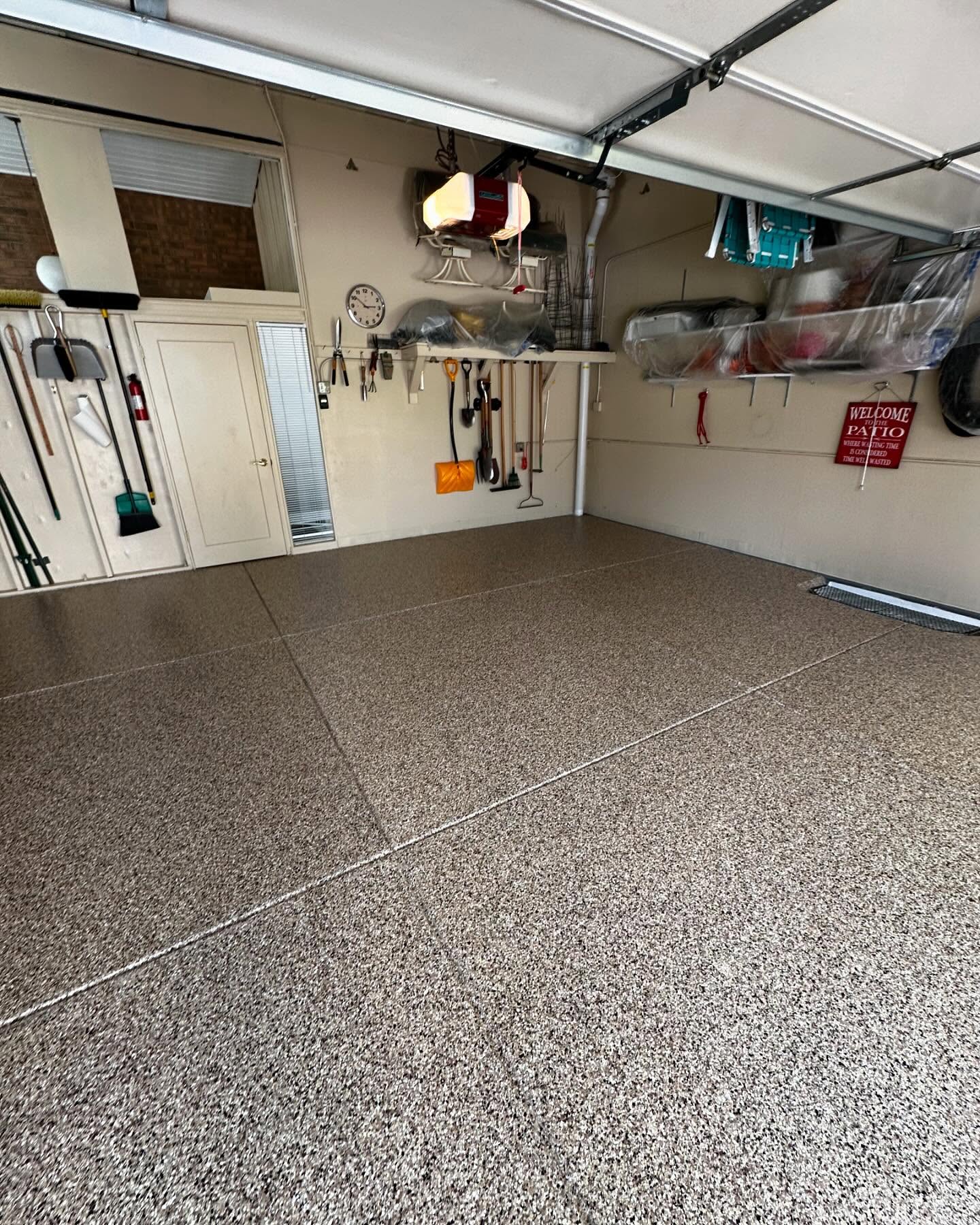
A properly installed professional coating is built to resist hot-tire pickup far better than thin DIY kits. Still, it helps to be aware of it. After a long summer drive, tires are hot and soft. On a newly coated floor especially, give the coating its full recommended cure time before parking on it, and follow the specific guidance your installer gives you. For more on why thin coatings struggle with this, see our post on why garage coatings fail in Colorado.
Preventing and handling scratches
Topcoats are tough, but they are not indestructible. A few habits help:
- Use furniture pads under workbenches, shelving feet, kickstands and jack stands.
- Do not drag heavy items. Lift them or use a dolly with soft wheels.
- Sweep grit regularly. Sand and gravel under tires and shoes act like sandpaper.
- Use a plastic snow shovel if you clear slush from the garage, rather than a metal blade.
Light surface scuffs in a flake floor are often hard to see because of the pattern. Deeper gouges should be looked at so moisture and deicers cannot get under the coating.
Do a yearly inspection
Once a year, ideally in spring after deicer season, take a few minutes to walk the floor in good light. Look for:
- Areas where the gloss has worn noticeably, often in the tire paths
- Chips, gouges or lifting at edges, the garage door threshold or around drains
- New cracks in the concrete telegraphing through the coating
- Persistent white residue or staining that does not clean up
Catching small issues early makes them easier to address. Over time, a high-traffic floor may benefit from a fresh topcoat to restore its sheen. If you notice something, reach out and SBV can take a look. For warranty questions, warranty terms are listed in your written estimate.
Simple care, long-lasting floor
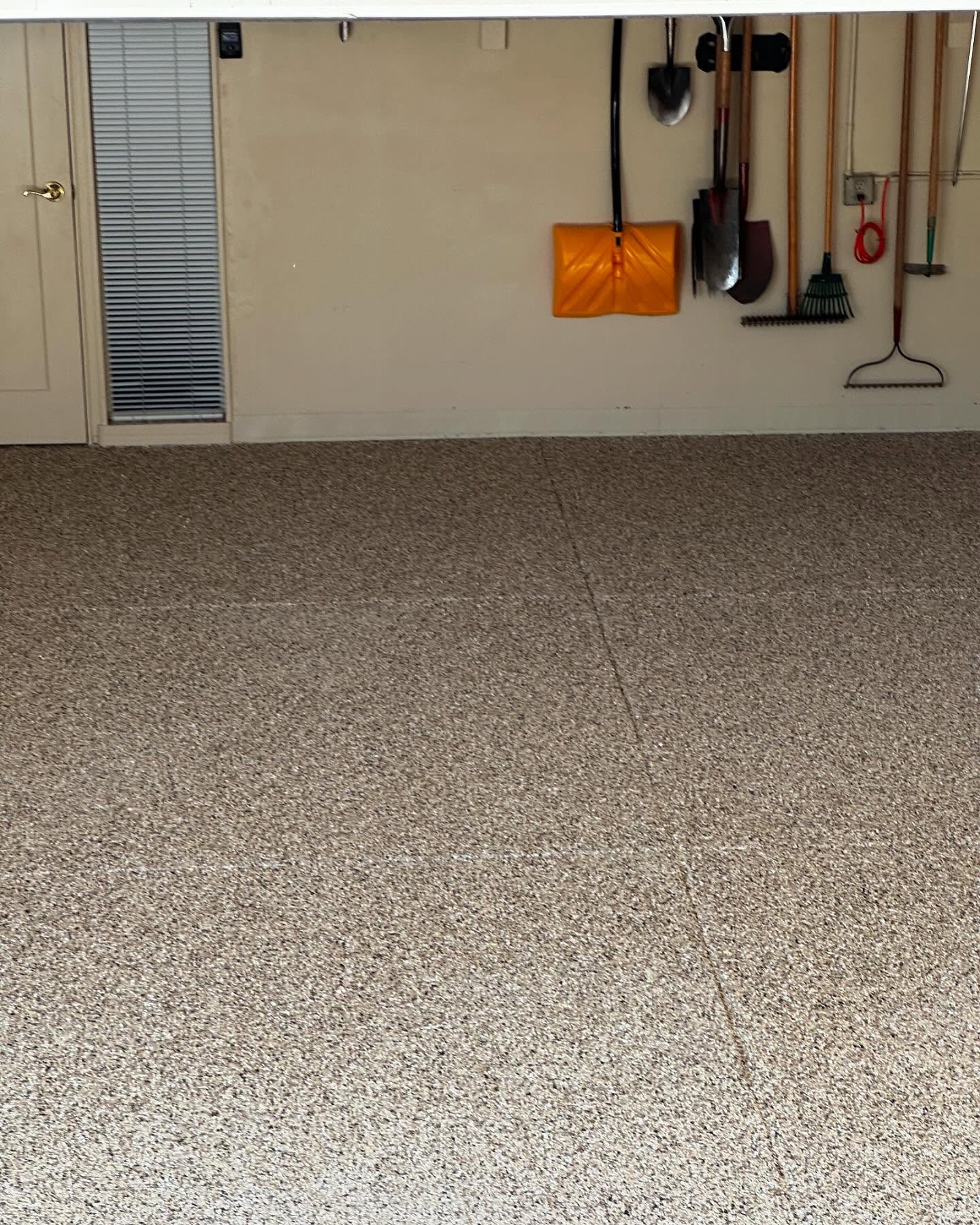
A coated floor does not need much: regular sweeping, prompt cleanup of spills, routine rinsing of mag chloride and a quick yearly check. Those habits go a long way toward keeping your floor looking the way it did on day one.
Thinking about a coating for your garage? Learn more about garage floor coatings and flake epoxy floors, see finished projects in the gallery, or read what homeowners say on our reviews page. SBV serves Denver and nearby areas and also works in mountain towns.
Ready to talk about your floor? SBV Concrete Coatings offers free estimates across Denver and nearby areas, seven days a week from 9 AM to 5 PM. Get a Free Quote online or call (303) 241-0610 to set up a visit.