
A coated garage floor should look good and hold up for a long time. So when a floor starts peeling near the door, bubbling in the middle or lifting under the tires, it is frustrating, and it usually means something went wrong before the coating ever went down. Colorado's climate is hard on concrete, but most failures trace back to a handful of avoidable causes. Here is what to watch for.
1. Poor prep and no grinding
The single biggest reason coatings fail is inadequate surface preparation. Concrete has a weak, smooth top layer called laitance, and garage slabs often carry oil, tire residue, old sealers and salt deposits on top of that. A coating applied over that surface is bonding to the contamination, not the concrete.
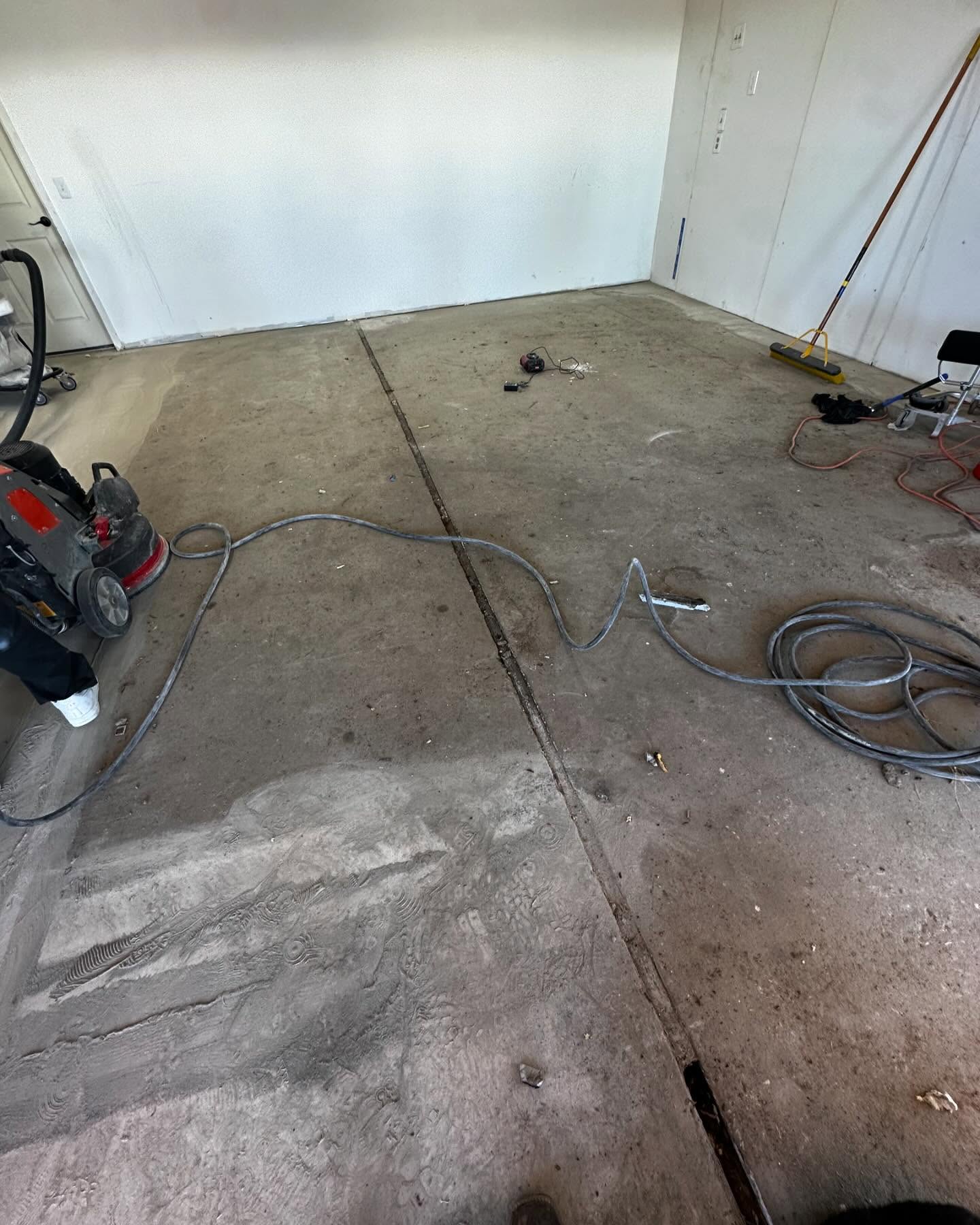
Acid etching, which comes with many DIY kits, often does not remove sealers or oil and can leave residue behind. Mechanical diamond grinding removes the weak surface layer and contaminants and leaves a consistent profile for the base coat to grip. SBV's tagline is "Pride in the Grind" for a reason: prep is where the floor is won or lost.
2. Moisture vapor coming up through the slab
Concrete is porous. Moisture in the soil below can move up through the slab as vapor. On bare concrete, that vapor escapes harmlessly. Under a non-breathable coating, it can build pressure and push the coating off the surface, showing up as blisters, bubbles or peeling patches.
Signs of a moisture problem include dark damp spots, white powdery deposits (efflorescence), or a history of previous coatings lifting. Where moisture is a concern, a moisture-mitigating primer or barrier can be installed before the coating system.
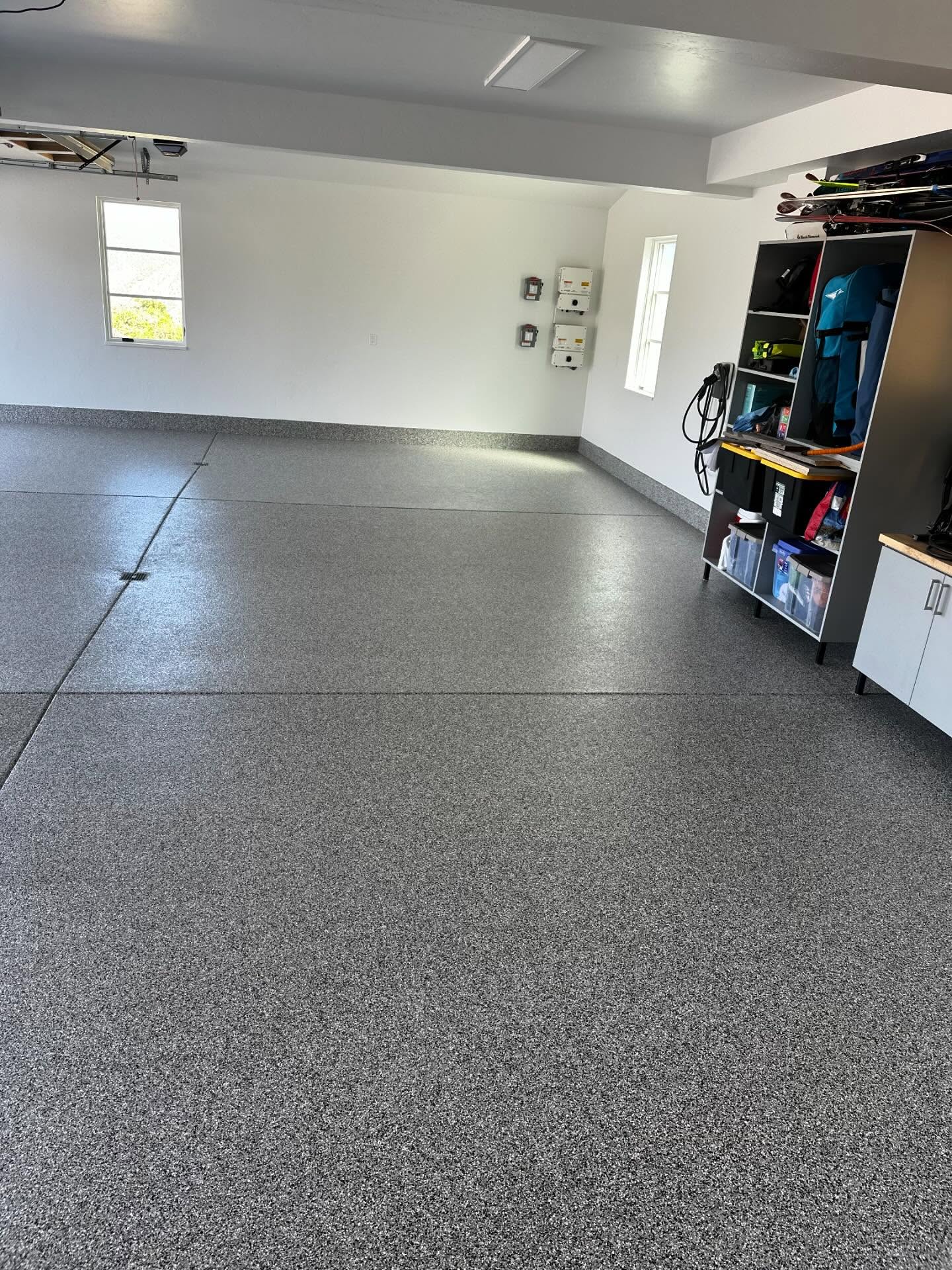
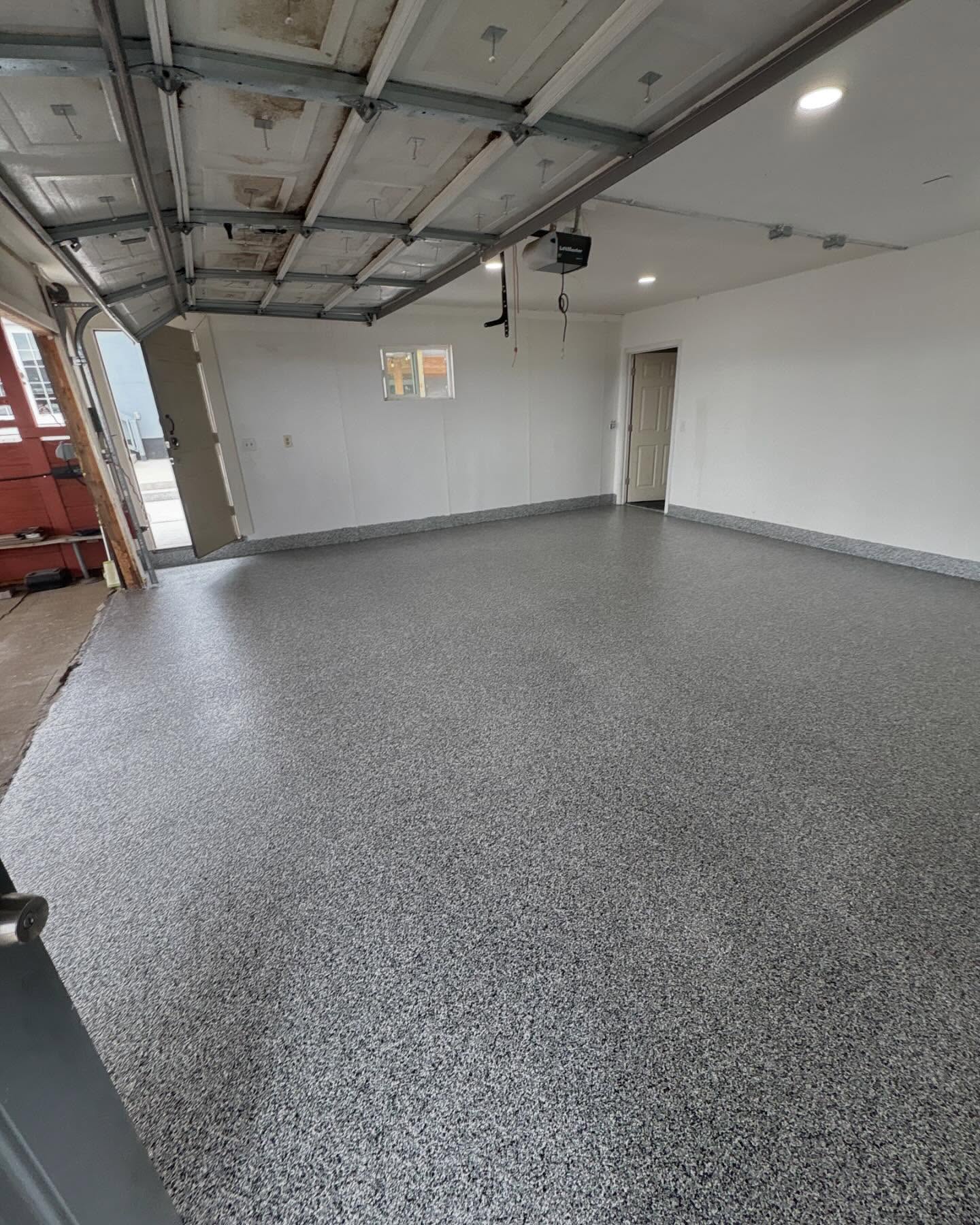
That is the approach SBV took for a homeowner who had dealt with constant moisture and peeling concerns in their garage. Instead of coating straight over the problem, a moisture barrier went down first, and the flake system was installed on top. Addressing the cause, not just the surface, is what gives a floor like that a real chance. Learn more on our concrete repair, coating removal and moisture mitigation page.
3. Freeze-thaw cycles
The Front Range sees many winter days when temperatures swing above and below freezing. Water that gets into cracks and pores expands when it freezes, and over many cycles that can widen cracks and break down the surface. If a coating is installed over unrepaired cracks or spalled concrete, the movement and damage underneath can telegraph through and cause the coating to crack or delaminate. Repairing cracks and damaged areas before coating helps prevent this.
4. Deicer salts and mag chloride
Colorado roads are treated with deicers, including magnesium chloride. Every winter drive brings slush loaded with those chemicals into the garage, where it drips off the vehicle and sits on the floor. On bare concrete, deicers can accelerate scaling and spalling. On a thin or poorly bonded coating, they can find their way into weak spots and undercut the coating from the edges. A properly bonded, well-built system with a durable topcoat stands up much better, especially if the salty residue is rinsed off regularly.
5. Hot-tire pickup with thin DIY kits
If you have ever seen a garage floor with tire-shaped peels, that is hot-tire pickup. Tires heat up on the drive home, then soften and grip the coating as they cool. When the coating is thin or poorly bonded, the tire can actually pull it off the floor.
Many big-box DIY kits are one-part, water-based products applied in a very thin film, often over etched concrete. They simply do not have the build or adhesion to resist that pull. Professional systems use a thicker, multi-coat build over a ground surface.
6. UV yellowing
Denver sits about a mile high, and the thinner atmosphere means stronger UV exposure. Many epoxies amber or yellow with sun exposure. In a garage where the door is open on sunny afternoons, you may see the floor near the door turn a different color than the back. A UV-stable topcoat, such as a polyaspartic, helps keep the color consistent. Our guide to flake vs. polyaspartic vs. epoxy explains the difference.
7. Installing in the wrong conditions
Coatings have temperature and humidity requirements. A slab that is too cold can slow or prevent a proper cure, and a garage that warms and cools sharply during an install can cause problems with adhesion or finish. Colorado's short fall and spring windows and cold winters mean timing and product choice matter. An experienced installer checks slab temperature and conditions and adjusts the plan instead of forcing the job.
When an old coating has to come off
Sometimes the floor you have is the problem. A failing coating cannot be fixed by putting another one on top. It needs to be removed down to sound concrete.
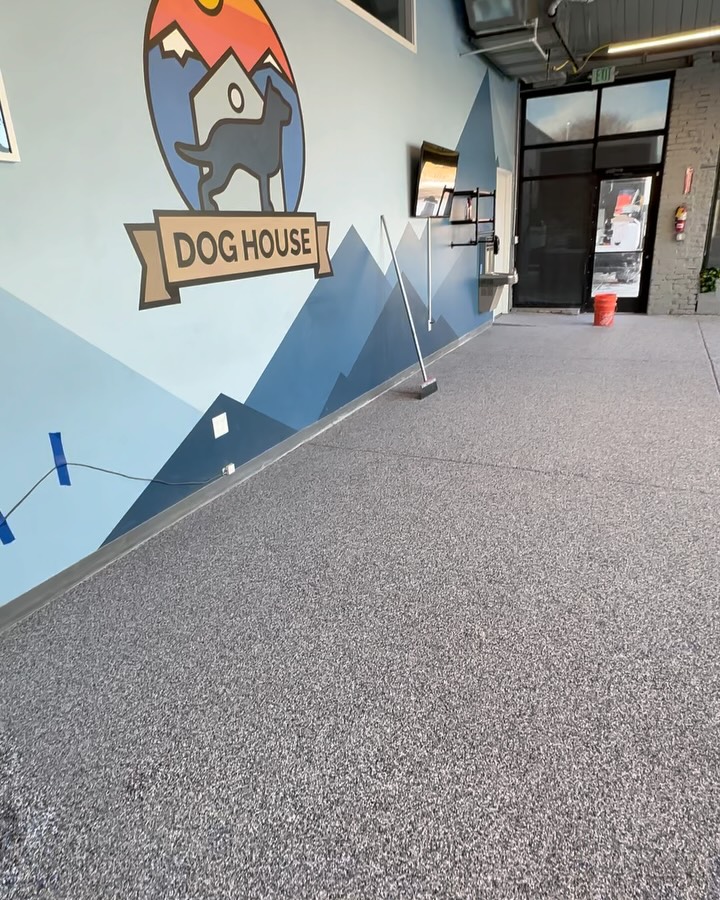
SBV took that approach at a dog daycare in downtown Denver. The existing surface was taken off with a full removal grind, and a new flake floor in the "Blue Ice" blend was installed over the freshly prepared concrete. In a space with heavy foot traffic and frequent cleaning, starting from a clean, sound slab was essential. You can see more on our commercial floor coatings page.
How proper prep prevents failure
Most failures share a root cause: the coating was asked to do something the surface underneath could not support. A well-installed floor generally follows a sequence like this:
- Inspect and evaluate the slab, including cracks, spalling, previous coatings and signs of moisture.
- Remove any failing coatings, paint or sealers.
- Grind the surface to remove laitance and contaminants and create a profile.
- Repair cracks, pits and spalled areas.
- Mitigate moisture where needed with a suitable primer or barrier.
- Install the system with the right build and a durable, UV-stable topcoat, in suitable conditions.
If you are dealing with a peeling floor or want to get it right the first time, take a look at our garage floor coatings page and the finished projects in the gallery.
Ready to talk about your floor? SBV Concrete Coatings offers free estimates across Denver and nearby areas, seven days a week from 9 AM to 5 PM. Get a Free Quote online or call (303) 241-0610 to set up a visit.